
What the Numbers tell us about making a case for Accessible Audiobooks:
For independent authors, publishers and content creators, audiobook accessibility is not simply a technical consideration. It is part of making your work available in a format that supports choice, independence and participation.
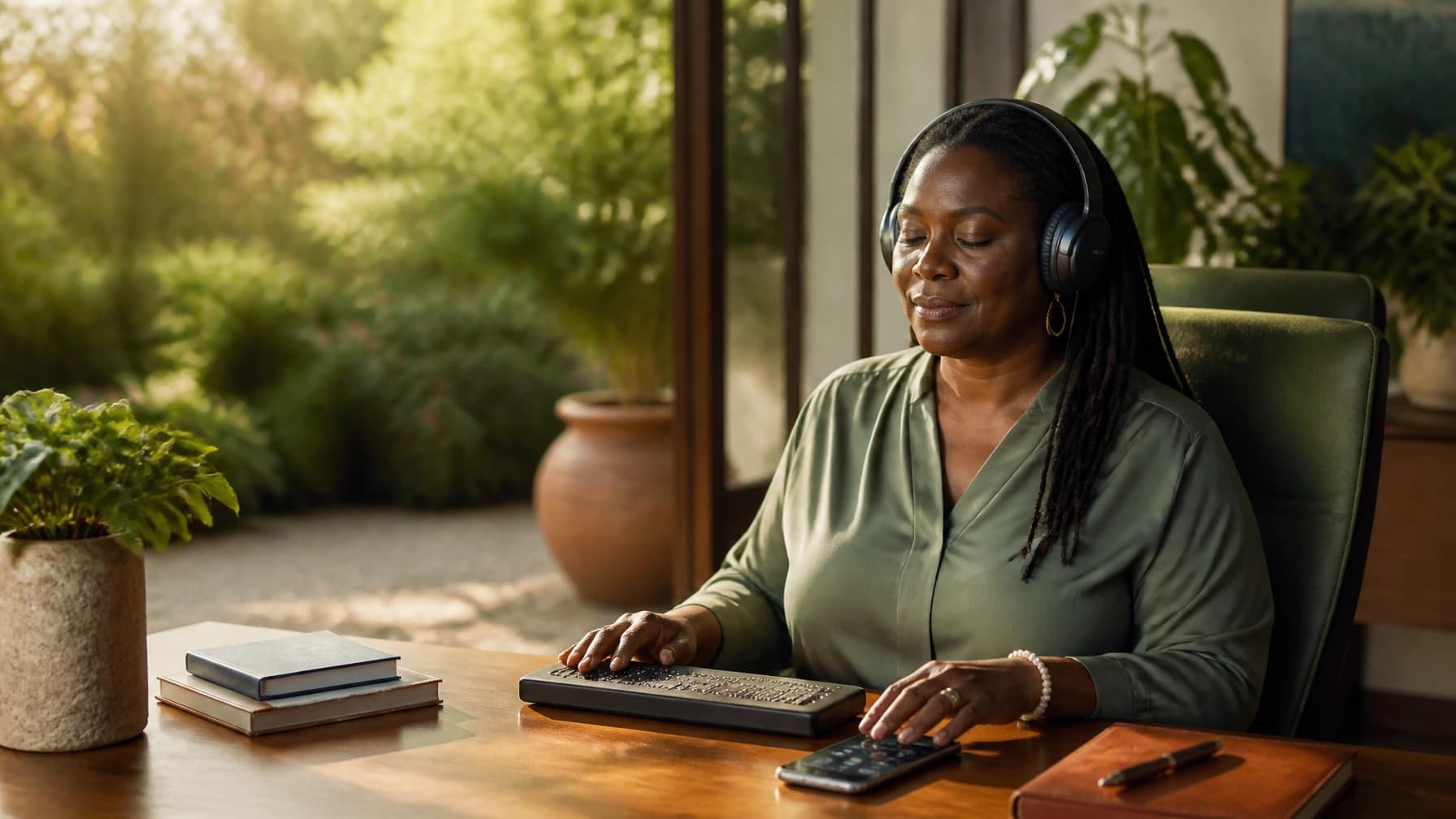
A book can be expertly written, beautifully designed and still remain out of reach. The evidence on sight loss is clear; the opportunity for more inclusive audio publishing is just as clear. The numbers below show the scale of potential need across the United States, Europe and the UK. They also show why definitions matter.
Start with the definitions, not the headline
Statistics about sight loss are often presented as though they measure the same thing. They do not.
Some figures refer to visual acuity measured after correction. Others include uncorrected refractive error, self-reported difficulty seeing, or broader categories of vision impairment. Geographic boundaries also vary.
That is why responsible publishing decisions need more than one large number. They need context.
United States: three different measures of vision loss
The US Centers for Disease Control and Prevention’s Vision and Eye Health Surveillance System (VEHSS) provides 2024 modelled estimates using different categories of visual acuity loss.
According to the CDC VEHSS prevalence estimates, the figures include:
These estimates should not be read as three unrelated populations. They represent different levels of scope. The broad presenting-vision figure includes people whose sight may improve with appropriate correction, while the best-corrected figure focuses on loss that remains after correction. The blindness estimate is narrower again.
You may also encounter older CDC headline figures describing approximately 7 million people with vision impairment, including around 1 million people who are blind. That earlier headline relates to different data years and definitions. It should not be placed directly beside the 2024 VEHSS figures without explaining the distinction.
For authors, the practical point is simple: the audience affected by barriers to standard print is larger and more varied than any single blindness statistic suggests.
Europe: one region, several valid estimates
The European picture becomes more complex because “Europe” can mean different things.
The World Health Organization Regional Office for Europe reports that approximately 90 million people in the WHO European Region have vision impairment or blindness. This is around 9 per cent of the Region’s population : approximately 1 in 10 people.
That is a regional estimate, not a 2026 census. The WHO European Region includes countries beyond the European Union, so the figure should not be described as an EU-only statistic.
The European Blind Union, meanwhile, cites over 30 million blind or partially sighted people in geographical Europe. Its facts and figures page explains that definitions, registration criteria and data quality vary between countries.
Why is the EBU figure so different from the WHO/Europe estimate?
The answer lies in scope and methodology. The figures may cover different territories, different degrees of sight loss and different approaches to counting. The EBU also notes that some people with sight loss may not formally declare or register their condition. Earlier WHO estimates cited by EBU focused on defined categories of blindness and low vision, while broader regional figures can include a wider range of impairment.
Neither number should be treated as a definitive headcount of the same population. Together, however, they demonstrate that tens of millions of people across Europe may benefit from content that is not dependent on visual reading.
The UK: prevalence is not the same as registration
The UK figures offer another important lesson in careful reporting.
The Royal National Institute of Blind People (RNIB) reports that:
More than 2 million people are living with sight loss in the UK.
More than 1 million are blind and partially sighted people living with a long-term, irreversible eye health condition.
Around 320,000 people are registered as Sight Impaired or Severely Sight Impaired.
Around 250 people start to lose their sight every day.
The number of people with sight loss is projected to rise to over 4 million by 2050.
Nearly 80 per cent of people with sight loss are aged 65 or older.
Around 60 per cent are women.
The registered figure is a subgroup, not a prevalence estimate. Registration is optional and involves an administrative process. It therefore does not capture everyone living with sight loss.
The RNIB’s registered blind and partially sighted briefing reports 322,638 registered blind and partially sighted people in the UK, based on the latest available data across all nations. The same briefing stresses that registration is not a measure of prevalence.
This distinction matters for publishing. If you design only for people who meet a formal registration threshold, you risk overlooking many people whose sight makes standard print difficult, tiring or inaccessible.

What the numbers do not tell us
There is no robust, population-wide statistic that tells us what percentage of blind or visually impaired people listen to audiobooks.
It would be tempting to fill that gap with a confident adoption figure. That would not be responsible.
People with sight loss have diverse preferences, circumstances and access needs. Some listen to audiobooks regularly. Some prefer braille, accessible eBooks, screen readers, large print or a combination of formats. Others may face cost, platform, device or connectivity barriers.
The responsible case for accessible audiobooks should not depend on an unsupported percentage of listeners.
It should depend on whether audio can remove a barrier for someone who wants to access your work.
Why audiobooks can support access
A thoughtfully produced audiobook may offer several practical benefits:
Access without visual reading: listeners can experience a novel, essay or guide without relying on print or screen text.
Reduced visual strain: listening may be more comfortable than reading for extended periods, particularly for people with fluctuating vision or visual fatigue.
Hands-free use: audio can fit around cooking, travelling, resting or other activities.
Adjustable playback: compatible players may allow listeners to change speed, pause easily and return to a previous passage.
Chapter navigation: well-structured files make it easier to find, revisit and manage content.
Compatibility with accessible devices: audio can form part of a workflow involving smartphones, computers, dedicated players, screen readers and other assistive technology.
These benefits are not automatic. A badly structured file, confusing metadata or an inaccessible player can create new barriers. Audio quality matters, but so do chapter names, track order, contents information and the accessibility of the platform where the audiobook is sold or delivered.
Audiobooks also complement rather than replace other formats. Your inclusive publishing plan may include an accessible eBook, braille, large print, transcripts, descriptive information and screen-reader-friendly web content.
Accessibility begins with the manuscript
Before production, review your source text for anything that depends on the page.
Tables, diagrams, image captions, footnotes, decorative formatting and references such as “see the image below” may need to be adapted for audio. A heading that is visually obvious on a page may need to be spoken clearly in narration.
For a novel, consider character clarity, pronunciation and consistent pacing. For non-fiction, think about how lists, charts and section headings will be understood by someone who cannot see the original layout.
The Accessible Books Consortium’s best-practice guidance and the BIC Digital Audiobook Accessibility Checklist offer useful starting points.
Most importantly, seek feedback from people with relevant lived experience. A blind or visually impaired reader can identify assumptions and barriers that may be invisible to you. Accessibility is a process of listening, testing and improving : not a claim to make once and forget.
Where Lama Mani can help
Inclusive publishing involves more than producing an audio file. But the production step does not need to be expensive, slow or studio-heavy.
A simple, no-studio-required audiobook generator can help you create an audio edition from written work or an eBook. Lama Mani supports rapid processing, flexible voice selection and professional-quality Digital Narrator output, with word-based billing so you can scale costs to the length and voice quality of your project.
Its ebook to audiobook conversion guide explains how a clean manuscript can move into production with less friction. For more detail on the wider process, see A Practical Guide to Creating More Accessible Audiobooks.
AI narration can make it simpler to produce a polished first edition, test different approaches and bring audio to projects that might otherwise remain print-only. It does not, by itself, guarantee accessibility compliance or meet every listener’s needs.
Treat it as one practical step in a broader process: prepare, produce, test, gather feedback and refine.

Turn evidence into action
The data across the US, Europe and the UK cannot be reduced to one universal number. Definitions differ. Years differ. Regions differ.
The underlying message is still strong: millions of people live with sight loss, and many may benefit when written work is available in audio alongside other accessible formats.
You do not need to solve every accessibility challenge in one production. Start with a clean manuscript. Make visual information meaningful in sound. Create clear chapters. Check the listening journey. Invite informed feedback.
Then let your words travel further : with audio that feels professional, respectful and genuinely useful.